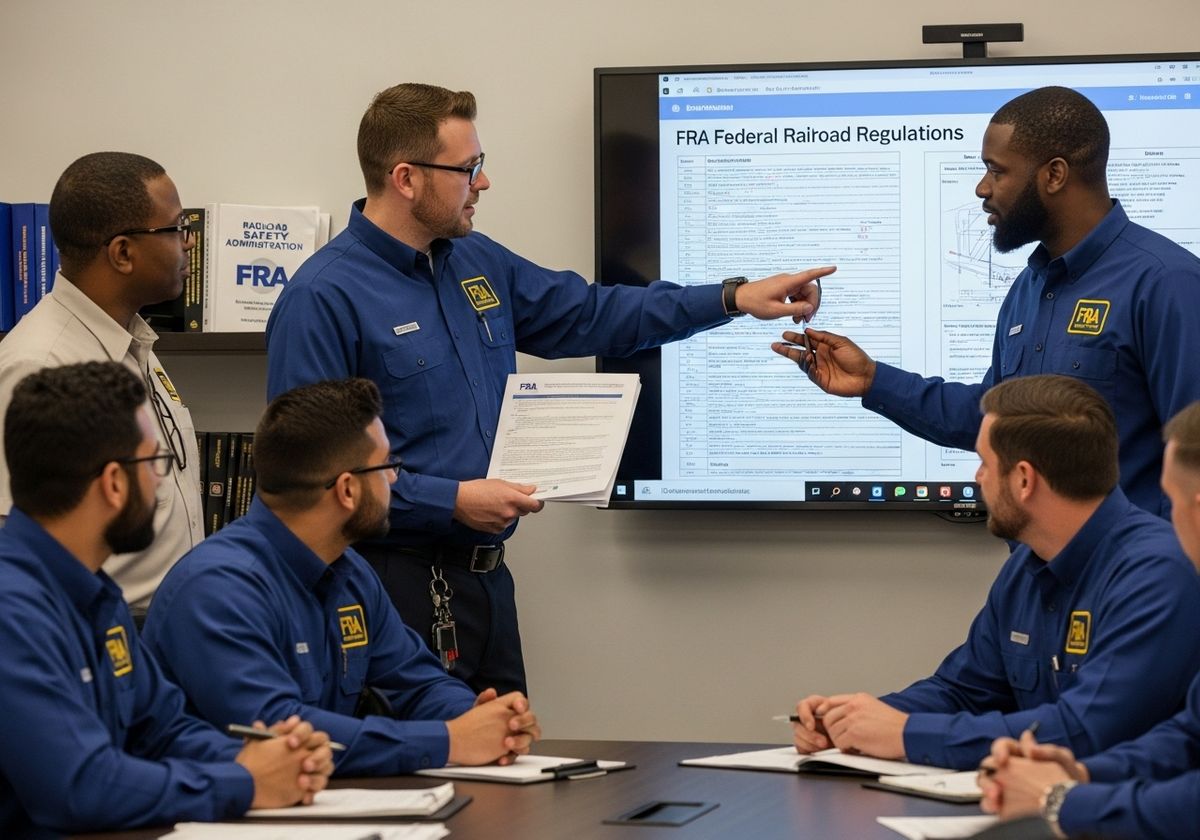
Navigating the complex landscape of railroad safety can be challenging, especially when it comes to adhering to Federal Railroad Administration (FRA) regulations. Ensuring your team is not only well-trained but also consistently compliant with these regulations is crucial for maintaining a safe working environment and avoiding costly penalties. Let's explore some key strategies to help you keep your team FRA compliant.

Understanding FRA Regulations
The foundation of FRA compliance lies in a comprehensive understanding of the regulations themselves. The FRA sets forth specific requirements covering various aspects of railroad operations, including track safety standards, locomotive safety, operating practices, and more. It's essential to stay updated on the latest changes and interpretations of these regulations, as they can evolve over time. Ignoring these regulations can result in hefty fines and, more importantly, jeopardize the safety of your team.
Implementing Robust Rail Safety Training Programs
A well-designed rail safety training program is paramount for ensuring FRA compliance. Your program should cover all relevant aspects of railroad safety, including hazard recognition, accident prevention, emergency response, and the proper use of equipment. Regular refresher courses and ongoing training are also crucial to reinforce knowledge and address any emerging safety concerns. Make sure your training program aligns with federal railroad administration regulations.

Establishing Clear Railroad Rules and Procedures
Clear and concise railroad rules and procedures are essential for guiding employee behavior and promoting a culture of safety. These rules should be readily accessible to all team members and consistently enforced. Regular audits and inspections can help identify areas where rules may be unclear or ineffective, allowing for necessary revisions and improvements. These rules should take ocip insurance and railroad safety into account.
Monitoring and Auditing for Continuous Improvement
Compliance is not a one-time achievement but an ongoing process. Implementing a system for monitoring and auditing your team's adherence to FRA regulations is crucial for identifying potential gaps and areas for improvement. Regular self-assessments, internal audits, and external reviews can help you proactively address any compliance issues before they escalate into larger problems.

Conclusion
Staying on top of FRA compliance requires a multi-faceted approach that includes a thorough understanding of regulations, comprehensive rail safety training, clear rules and procedures, and continuous monitoring. By prioritizing these elements, you can create a safer working environment, protect your employees, and avoid costly penalties. Regional Railroad Safety Services is dedicated to helping higher education institutions navigate the complexities of railroad safety and regulatory compliance. Contact us today to learn more about our specialized training programs and consulting services, and be sure to check out our other blog posts to learn more about railroad safety!